


Rosa Guerra

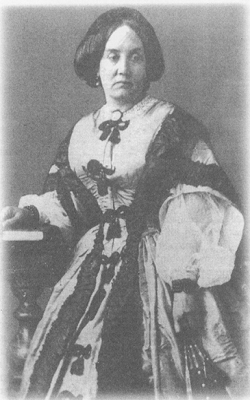 Rosa Guerra
Translated by Mia Ruiz
Born in Buenos Aires in 1834, Rosa Guerra, was an educator, poet, playwright and journalist. From a young age, she was a vocal advocate for the education of women. She taught and later directed a private school in the Belgrano neighborhood of Buenos Aires previously managed by Ana Bevans. In 1852, she began her literary career with the publication of her own newspaper, La Camelia, published by the Republicana press after the fall of the dictatorship of Juan Manuel de Rosas. The biweekly publication consisted of contributions from anonymous collaborators. Rosa Guerra introduced ideas of social equality and female emancipation with the slogan “Liberty! Not license; equality between the sexes,” while also strongly opposing the idea that society should become less religious. La Camelia advocated that women be given access to a scientific education since they, in fact, were responsible for teaching what was right and wrong, something beneficial for both families, and in a larger sense, the nation. A common theme across Guerra’s journalism is her call to challenge the belief that Latin American women are inferior to their European and North American counterparts and to recognize the experiences of the women who were exiled from Argentina because they opposed the Rosas dictatorship.
La Camelia and its content were quite unique in journalistic spheres across Argentina because this was a space traditionally dominated by male voices. As a woman, Guerra started from a position of systematic disadvantage; she attempted not only to destabilize existing power relations, but also to challenge the restrictions imposed on women’s participation in the public literary discourse. Given the newspaper’s structure and its focus on domestic issues, La Camelia was the target of strong criticism and mockery in the national press, including threats based on the controversial content discussed in its pages. La Camelia followed La Aljaba as the second literary newspaper in Argentina founded by a woman. La Aljaba was short-lived, and La Camelia ceased publication on May 11, 1852, having published only 14 installments.
In July of 1852, Guerra returned with a new weekly publication: La Educación, a religious, poetic and literary newspaper. This time, Guerra publicly claimed authorship for her work, acknowledging that she decided to found another newspaper based on the criticism and ridicule received by La Camelia. Unlike that previous publication, in La Educación, in some letters and essays, Guerra used the pseudonym “Cecilia” and focused on the issue of women’s education.
Guerra questioned prevailing public opinions in Argentina by arguing that women could both pursue a science-based education and engage in writing without neglecting their domestic roles. In addition to advocating for a practical education for women as architects of future Argentine generations, Guerra supported European immigration projects that began to arise mid-century. She rejected the imitation of French fashion because it was irrelevant to the Argentine reality and instead promoted political reforms aimed at reopening educational centers and enacting laws to protect women.
La Educación had significant support, not just from its many individual subscribers, but also from the provisional government who not only subscribed to the newspaper, but also incorporated it into the reading materials for schools that provided free basic education in impoverished areas. La Educación stopped publishing on August 7, 1852 after just three issues, which clearly reflected the challenges facing journalism at the time—a profession still predominantly seen as a male sphere. Guerra continued her journalistic work as a contributor to El Nacional (1824- 1826), La Tribuna (1853-1884), and La Nación Argentina (1862-1870).
Rosa Guerra was one of the first women novelists to be published in Argentina. Her debut novel, Lucía Miranda, was published in 1860 and was based on the folk legend of Lucía Miranda, the first European woman to be captured by indigenous people [1]. In this novel, she recounts the saga of Miranda, a Spanish woman who arrived at the Paraná Coast with her husband, Sebastián Hurtado, as colonizers in 1532. Lucía began her evangelical mission with Chief Mangora, with whom she spoke of the pleasures of Christian love through marriage. Mangora and his brother Siripo fell in love with Lucía, who, despite feeling a clear emotional attraction towards Mangora, remained faithful to her husband.
Faced with Lucía’s rejection, the brothers attacked the Spanish fort intending to kidnap her. Mangora died in combat and Miranda and her husband were taken captive by Siripo. To save Sebastian’s life, Lucía agrees to become Siripo’s wife. Siripo spares Sebastian’s life on the condition that he marry an indigenous woman. Neither Sebastian nor Lucía can hide their love for each other from Siripo, and as a result, they are both executed: Lucía is burned alive and Sebastián is murdered by being shot with arrows.
In this novel, Guerra explored the possibility of an interracial union between a white woman and an indigenous man, showing some sympathy for Mangora, whose actions are portrayed as the result of his misguided love for Lucía. Although the story introduced the threat of sexual transgression, it never actually takes places. Lucía sacrificed herself with romantic fatalism, thus rejecting the savage practices of the indigenous people. Through her adaptation of this legend, Guerra reinforced the distinction between indigenous barbarism and white civilization, presenting it as a failed attempt at colonization and Europeanization.
In 1862, Guerra became Argentina’s first female playwright when she published Clemencia, a three-act drama written in verse and dedicated to President Bartolomé Mitre. In her play, Guerra continued her social critique and highlighted the lack of scientific education among women. She wrote: “If it were like other countries/ Where women receive an education,/ Her education is not defective/ Like ours; she is taught/ The study of the sciences/ She is enlightened in conscience/ And her knowledge is equal/ To that of men; she is a poet,/ Writer, a literary intellectual,/ She paints, sings and even creates portraits,/ She travels and contributes to the press./ Thus, even if she does not marry/ Her life is active and fulfilled.” (70) Guerra sought to expand women’s social roles by advocating for education, writing, and the arts as ways for women to participate in public life and expand their sphere of action. Clemencia’s antagonist, Inés, reveals the social constraints imposed on women, particularly those that arise from marriage: “A woman is lost/ if by fifteen she is not yet married, / She has nothing left to do,/ Society rejects her […] Her crime – to be unmarried,/ What a frightful aberration!” (71). Guerra’s argument criticizes nineteenth-century marriage norms that reinforced women’s subordination and restricted what women were allowed to do in society or how they were expected to behave. Clemencia emerges as an exception among women of her time, who often conform to the superficialities of the century and accept the marriage as a path to economic and social advancement.
In political terms, Clemencia portrays the seizure of property, the persecution of Unitarians, and the forced emigrations from Montevideo during the Rosas administration. The third act highlights the lack of resources available to those attempting to reclaim their properties, the indifference of judges and notaries toward the demands of the needy, and the lack of recognition and financial support for those who fought in the independence movement and the anti-Rosas campaigns.
Rosa Guerra passed away unmarried on August 18, 1864. Her book of poems, Desahogos del corazón, dedicated to Vicente Fidel López was published posthumously that same year. This final project reflects Guerra’s continued pursuit of freedom from the social determinism of the time. The poem “Despedida,” dedicated to her friend Juana Leloir, reflects Guerra’s goal to make her own life decisions without pleasing or serving anybody else and challenge the prevailing rules of social interaction: “If I could exist/ Without ever being bound/ By any connections/ Be happy or be thankful.” (26) In her poem “La niña de quince años,” Guerra talks about love and a rejection of fashionable men: “I would never want to see/ Those new puppets/ Designed by fashion, / Those hollow dolls/ That seem empty/ In plaster mold/ That only exhibit/ Their empty display to the wind.” (38) Her preferences lean toward an educated man: “But my desires, are not limited/ If I do not want him to possess/ A cultivated talent/ In the precious sciences/ That charms the mind,/ Elevates the soul,/ And enlightens the intellect.” (42)
In her poem “Mi reconocimiento,” Rosa Guerra uses an acrostic technique by inverting the first letter of each line to spell the proclamation “Viva Rivadavia.” (135) She thanks President Rivadavia for the survival of her family and for her education. Her critique of the Rosas regime continues to be reflected throughout this book through poems like “La niña expósita,” where Guerra refers to the closure of an orphanage and the abandonment of the orphans who once lived there.
Rosa Guerra was among the first women in Argentina to participate in literature and journalism, a woman who challenged the limited means available for her gender to participate in the Buenos Aires’ press.
Although her public engagement was brief and marked by limited support, and her journalism was defined by an abrupt disappearance, her voice initiated discussion about unequal access to education and women’s social roles. The country’s political situation ensured that her literary legacy is still a critical element in understanding the sociocultural dynamics of nineteenth-century Argentina.
[1] The legend of Lucía Miranda was first published in 1612 by Ruy Días in La Argentina. In 1860, the same year that Rosa Guerra’s work was published, Eduarda Mansilla published her novel titled Lucía Miranda. Later, in 1883, Celestina Funes recounted her version of the legend in the poem Lucía Miranda: Episodio nacional.
Vanesa M. Landrus Eastern Illinois University

